
Python FullStack
Why Python Full Stack ...!
These are individuals who have expert knowledge of front- and back-end components, allowing them to build an application using Python. They use their knowledge and experience in web development languages, responsive design, performance optimisation and web security for designing accessible, responsive and functional front ends. Their expertise in web frameworks, database management and security enables them to build robust, efficient and scalable back-end systems. After building both components, they use application programming interface integration, authentication and authorisation techniques to combine them into a fully functioning website or application.
FrontEnd Web Development
Hyper Text Markup Language (HTML)
HTML is the standard markup language for creating Web pages. HTML describes the structure of a Web page. HTML consists of a series of elements. HTML elements tell the browser how to display the content.
Cascading Style Sheets (CSS)
Cascading Style Sheets (CSS) is a style sheet language used for specifying the presentation and styling of a document written in a markup language such as HTML or XML (including XML dialects such as SVG, MathML or XHTML). CSS is a cornerstone technology of the World Wide Web, alongside HTML and JavaScript.
JavaScript (JS)
JavaScript is a high-level, interpreted programming language primarily used for building interactive and dynamic websites. It is a key technology in web development, often used alongside HTML and CSS to enhance user experience. See, javascript's vast and versatile features make it a popular choice among programmers
Bootstrap
Bootstrap is a free, open source front-end development framework for the creation of websites and web apps. Designed to enable responsive development of mobile-first websites, Bootstrap provides a collection of syntax for template designs.
ReactJS
React is a free and open-source front-end JavaScript library for building user interfaces based on components. It is maintained by Meta and a community of individual developers and companies. React can be used to develop single-page, mobile, or server-rendered applications with frameworks like Next.js
BackEnd Web Development
Python
Python is a high-level, general-purpose programming language. Its design philosophy emphasizes code readability with the use of significant indentation. Python is dynamically typed and garbage-collected. It supports multiple programming paradigms, including structured, object-oriented and functional programming.
Sql/MySql
SQL stands for Structured Query Language which is a computer language for storing, manipulating and retrieving data stored in a relational database. SQL is the standard language to communicate with Relational Database Systems. All the Relational Database Management Systems (RDMS) like MySQL, MS Access, Oracle, Sybase, Informix, Postgres and SQL Server use SQL as their Standard Database Language.
Django
Django is a free and open-source, Python-based web framework that runs on a web server. It follows the model–template–views architectural pattern. It is maintained by the Django Software Foundation. It can work with any client-side framework, and can deliver content in almost any format (including HTML, RSS feeds, JSON, and XML).
Flask
Flask is a micro web framework written in Python. It is classified as a microframework because it does not require particular tools or libraries. It has no database abstraction layer, form validation, or any other components where pre-existing third-party libraries provide common functions.
REST Api
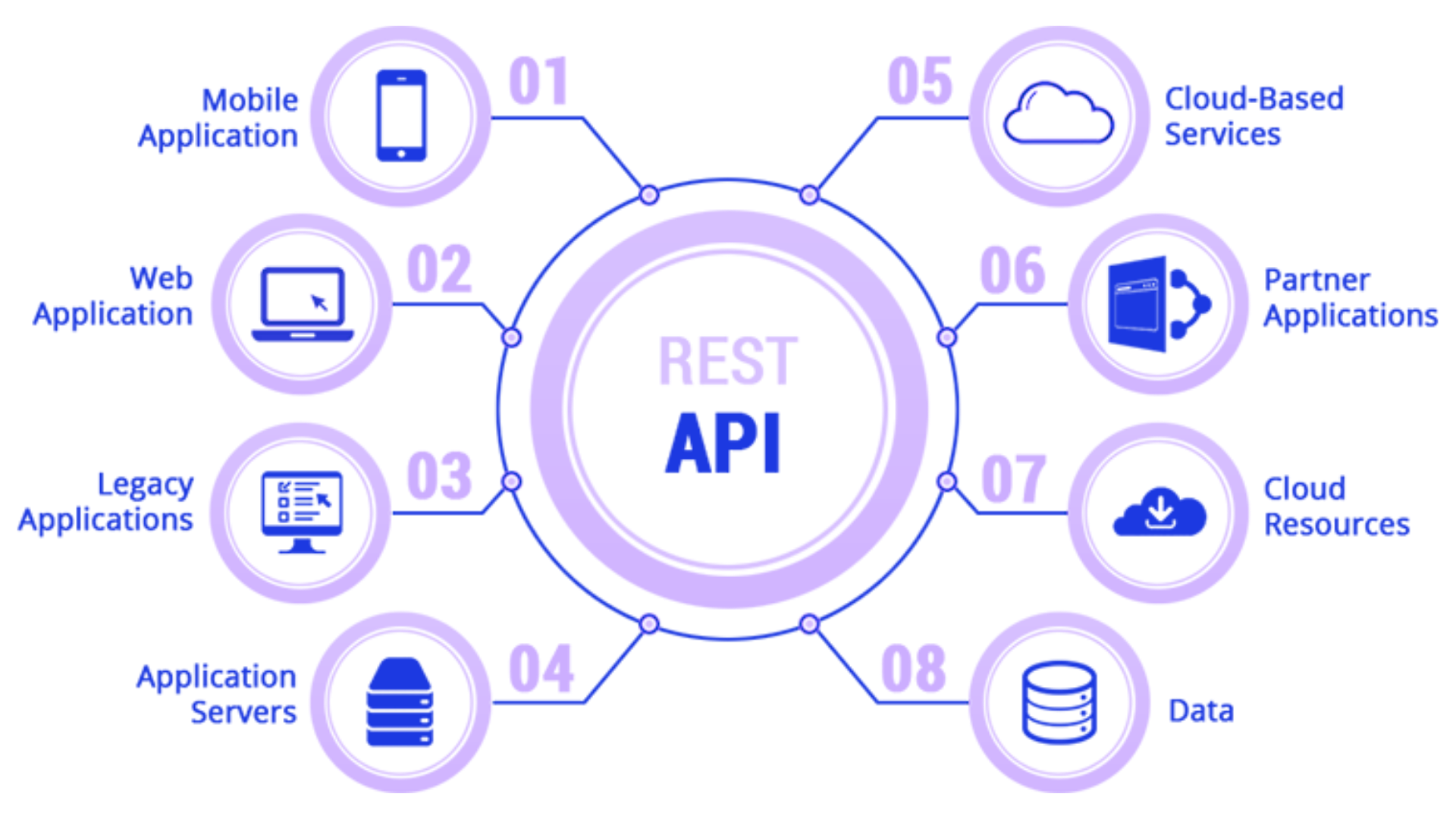
Flask is a micro web framework written in Python. It is classified as a microframework because it does not require particular tools or libraries. It has no database abstraction layer, form validation, or any other components where pre-existing third-party libraries provide common functions. REST APIs communicate through HTTP requests to perform standard database functions like creating, reading, updating and deleting records (also known as CRUD) within a resource. For example, a REST API would use a GET request to retrieve a record. A POST request creates a new record.
Contact Us
We're here to help! Whether you have questions, feedback, or just want to say hello, we'd love to hear from you. Please feel free to reach out to us using the contact information provided below or fill out the form on this page.
For urgent inquiries outside of our operating hours, please leave us a message, and we'll get back to you as soon as possible.
Thank you for choosing Clover Informatics! We appreciate your business and look forward to assisting you.
Raji@gamil.com
+91 - 0123456789
Lorem ipsum dolor sit amet, consectetur adipisicing elit. Labore, rerum ut nam porro esse amet, repellat debitis facilis quia in dignissimos architecto veritatis totam! Nisi nobis inventore veniam. Ex, laboriosam.
Get on Touch
+91 - 0123456789
Magadi Road
Kamakshipalya Bengalore
Karnataka PIN 560079